Kommeno
A narrative reconstruction of a war crime committed by the Wehrmacht in Greece
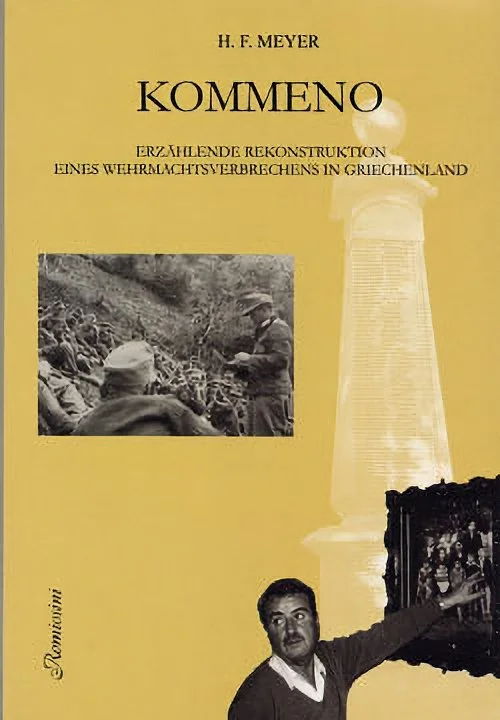
Kommeno
Erzählende Rekonstruktion eines Wehrmachtsverbrechens in Griechenland
(Cologne: Romiosini, 1999).
An abridged version was published by Thetis,
Mannheimer Beitraege zur Klassischen
Archaeologie und Geschichte Griechenlands und Zyperns, 4 (Mannheim 1997).
H φρίκη του Κομμένο
Αφήγηση-έρευνα για το ολοχαύτωμα του χωριού Κομμένο της ‘Αρτας στις 16 Αυγούστου 1943
Εkδοσεις Καλεντης, Αθήνα, 1998
The 1. Gebirgs (Mountain)-Division [1. GD] was transferred from the Caucasus to Epirus in the middle of July 1943 within the strategy of amassing troops to repel an expected allied invasion in Greece. The Italian occupying army was being so hassled by the partisans that they only were left in control of a few strategic points and larger towns. The commander of the Italian 9th Army, D’Almazzo, recommended to the German commander of the 1. GD von Stettner that “all male inhabitants should be arrested” as he considered them all to be "bandits". This was the only way to bring peace to the area. Although this radical proposal was not pursued, the Germans immediately introduced procedures to “cleanse” the main road between Ioannina and Preveza and all the adjacent villages. The partisans’ hit and run tactics avoided major clashes with the Germans, but dozens of villages were set on fire in the following weeks. Hundreds of civilians were killed.
The height of the terror was the massacre and annihilation of Mousiotitsa, Kommeno und Lingiades (German text), as the attached article describes.
One hundred and fifty-three men, women and children between the ages of one to seventy-five were butchered in Mousiotitsa on July 25th because of the discovery of a cache of weapons near the village.
Regiment commander Josef Salminger saw a partisan’s machine gun while on an inspection trip through Kommeno. As a so-called reprisal the village was shelled on August 16th. It was taken without any resistance, as there were no freedom fighters there. The mountain troops then murdered any one who could not flee: 317 people, 172 women and 145 men were killed. Ninety-seven were under fifteen years of age and fourteen were over sixty-five. Thirteen were only one year old. Thirty-eight people were burnt in their houses. One hundred and eighty-one houses were destroyed. Sadistic excess fired the killing fever, according to statements by survivors but also by members of the regiment.
When Salminger was murdered by partisans on October 1st, Hubert Lanz, commander of the XXII Gebirgsarmee-Korps, issued a Tagesbefehl, (order of the day/ German text) to avenge the death of his friend and leader of the regiment and called for a “ruthless retaliatory action”. Over 200 people were massacred. Among them were all those inhabitants of Lingiades who had not fled to the mountains. In this single village 87 civilians were killed, including year-old babies and old people over the age of ninety.
The actions of the 1st Mountain Division in Epirus led after the war to a series of preliminary proceedings against those responsible but no charges were ever preferred because no witnesses in Greece were questioned nor were the statements of the perpetrators ever verified. In his book, the author goes into the details of the inquiries and the witness statements.
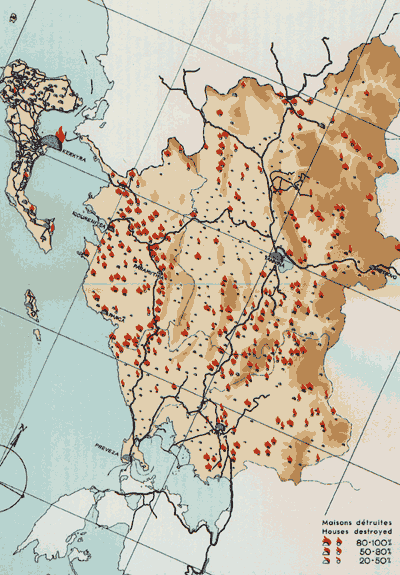
The Greek province of Epirus after the withdrawal of the German troops: Dozens of villages, particularly along the main routes from Igoumenitsa and from Ioannina to Arta and Preveza, had been partially or completely destroyed.
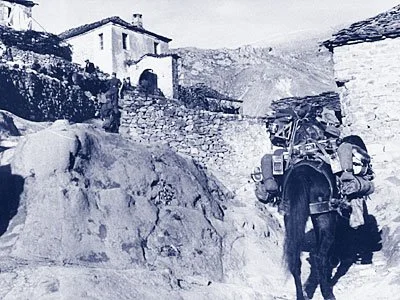
A so-called "mopping-up operation" carried out by mountain troops in Epirus.
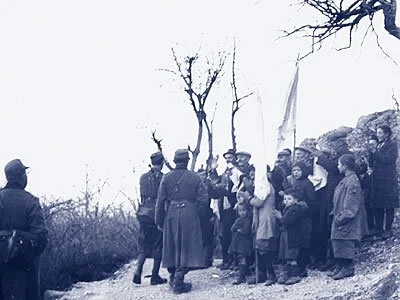
A so-called "mopping-up operation" carried out by mountain troops in Epirus.
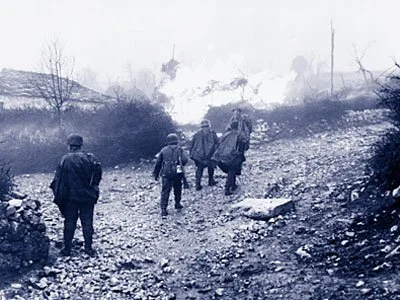
A so-called "mopping-up operation" carried out by mountain troops in Epirus.
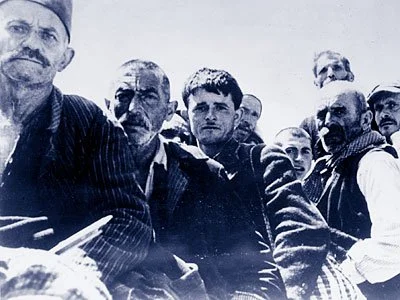
A so-called "mopping-up operation" carried out by mountain troops in Epirus.
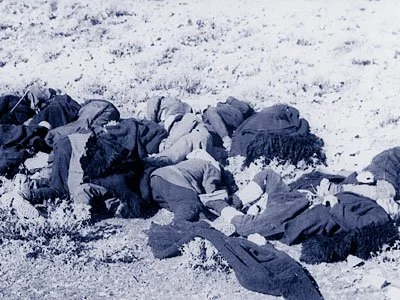
A so-called "mopping-up operation" carried out by mountain troops in Epirus.
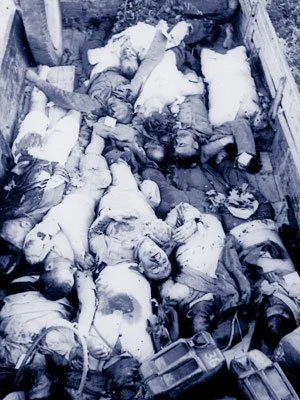
A so-called "mopping-up operation" carried out by mountain troops in Epirus.
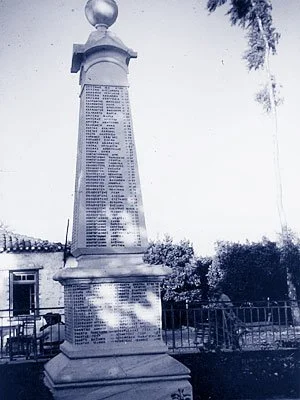
A memorial bearing the names of all 317 victims was erected in Kommeno after the war.
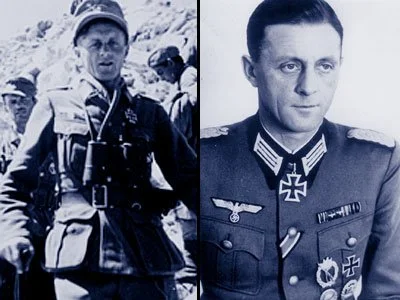
General of the Mountain Troops Hubert Lanz (left) and Regimental Commander Josef Salminger.
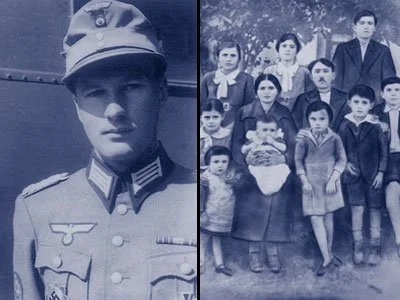
Major Reinhold Klebe, the officer in command of the operation, was never held accountable for the Kommeno massacre. After the war, he continued his military career in the Bundeswehr. On the right is the Mallios family, who celebrated the wedding of their daughter Alexandra (second from the upper left) on the evening before the massacre. With the exception of Maria (third from the lower right) and Alexandros (second from the lower right), all were either shot or burned alive in the house.
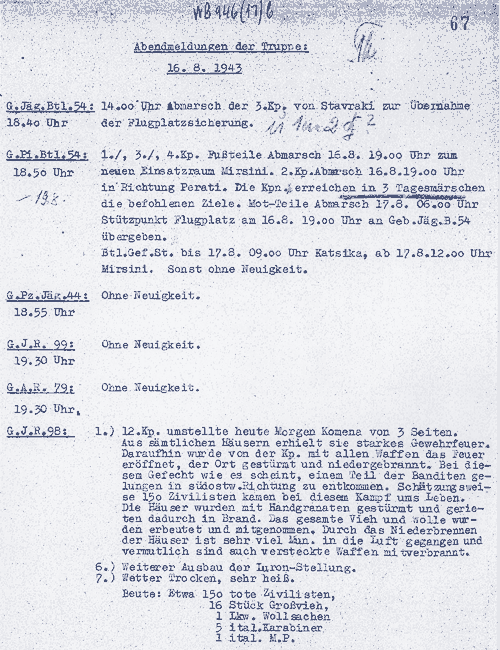
That evening, the troops reported to divisional headquarters: "Captured: approximately 150 civilians." The officer responsible there, Karl Wilhelm Thilo (who became a lieutenant general in the Bundeswehr in the 1950s), reported the following day to the "German General Staff at the Italian 11th Army" in Athens: "150 bandits killed." In doing so, he portrayed the criminal act as a legitimate military operation. In Athens, the officer responsible for the war diary, First Lieutenant Kurt Waldheim (later Secretary-General of the United Nations and President of Austria), completely altered the report. He wrote: "In the area of the 1st Mountain Division, the village of Kommeno was taken against strong enemy resistance. Enemy casualties."
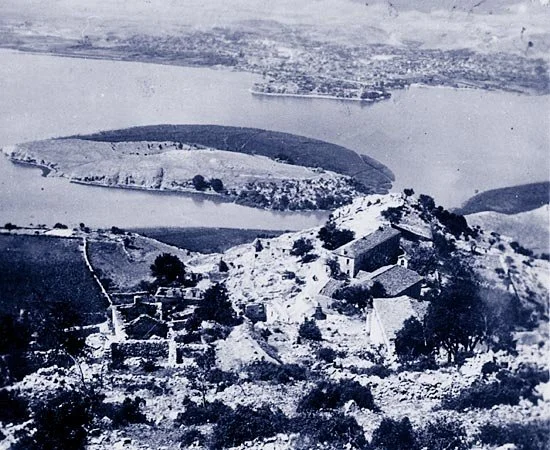
The foundations of the destroyed buildings of Lyngiades in the foreground. In the background, the city of Ioannina.
Reviews:
Karl Unger
Die Familie Mallios, Kommeno 1943
(...) Im Morgengrauen ds 16. Augusts 1943 fuhren deutsche Gebirgsjäger mit schweren Lastwagen ins Bergdorf Kommeno. Nur wenige Stunden dauerte das Massaker. 317 Zivilisten, Männer, Frauen jeden Alters, Jugendliche, Kinder, Greise wurden widerstandslos niedergemetzelt. Die gesamte anwesende Dorfbevölkerung, die Hochzeitsgesellschaft und die Familie Mallios wurden ermordet (...).
Die Informationen zu diesem weitgehend unbekannten Verbrechen der deutschen Wehrmacht hat H. F. Meyer (...) sorgfältig dargestellt.
Niki Eideneier, Romiosini
(...) Vorläufiges letztes Ergebnis [von Meyers Auseinandersetzung mit den Greueltaten deutscher Besatzungspolitik] ist die erzählende Rekonstruktion des Massakers von Kommeno, das selbst in der griechischen Öffentlichkeit kaum bekannt ist. Seine auf das Stilmittel des Tagebuchs zurückgreifende historische Erzählung verzichtet bewußt auf einen moralisierenden Impetus und präsentiert sich dadurch umso überzeugender als scharfe Anklage der nationalsozialistischen Barbarei. Meyer rekonstruiert das Kommeno-Massaker aus einer dreifachen Perspektive: Zu den Interviews, die er mit Überlebenden, sowohl auf Opfer- als auch auf der Täterseite geführt hat, gesellen sich aufschlußreiche Informationen, die er aus seinen systematischen Recherchen relevanter Militär- und Justizakten in deutschen Archiven gewinnen konnte. Gerade letztere werfen ein Licht darauf, wie kriminell nachsichtig sich Deutschland in der Nachkriegszeit Kriegsverbrechern gegenüber verhalten hat. Meyers Süprachstil ist durch schnörkellose Einfachheit und Nüchternheit gekennzeichnet. Gerade dadurch gelingt ihm eine sehr authentische Rekonstruktion des Wehrmachtsverbrechens von Kommeno, die den Leser regelrecht an seinen Sitz festnagelt.
Prof. Dr. Evangelos Konstantinou, Universität Würzburg in Philia
Das Grauen von Kommeno
Erasmus Schöfer in Chronika 6/7, 1999
Η ωαζιστική φηριωδία: Γερ. Κ. Αποστολάτου Πολίτικα Θέματα, 13.11.1998